Security & Compliance
Rethinking insider risk for a workforce of people and agents


Christopher O'Rourke, Craig Strubhart
Cloudflare
Cloudflare’s security team looks different than it did a year ago. More than 200 agents are now running work that used to be manual, our staff members spend their time differently, and the way we make security decisions has changed. In this session, we share what we’ve actually built, what we’ve learned shipping agents into production, and what’s changed about how the team works. It’s a customer zero look from inside Cloudflare security.
0:03I'm Graham Porzikas. I'm the chief security officer. What today is about is really about what we're doing internal. And so we actually have some internal people here too that I can introduce you as well. We all know what's going on with AI, right? I think this is my, you know, the world is ending, right? All these attackers are, you just saw me talk about the 310 billion attacks that we're seeing every day. I always kid about this slide because I'm like, your model has not broken out of the sandbox. It's not very good. So now I don't know if that's because of the user issue or it's a model issue. I tend to think it's a user issue, but I think, you know, this is, this is kind of the mantra that we hear is like the attacks are coming. We're going to get, they're going to get us. And you know, there's a lot of, and even, even the last few weeks I've attended a bunch of security events and like every vendor's telling you all the things that are going to get you.
0:59So let me tell you any good things. So today's about good. So, and I think this is the thing, like the tackers will always be ahead, right? Well, my view, not anymore. Um, I got two people at this table that would vouch for that. Um, two of my best. And, um, and, and I think what's interesting about this is the first time in my career, I feel really good about things. And I've been a CISO since 2000. three this is my seventh CISO job that means I'm old or I have the average tenure of a CISO which is like three years so I'm at almost four with Cloudflare but but I think what's interesting is like it's I actually feel very optimistic with what you can do now I just said this before we have 100 % of my team in security is using AI now that number's wrong it's 450 But we have 450 agents, skills files, harnesses in the organization, and we've automated many of these things.
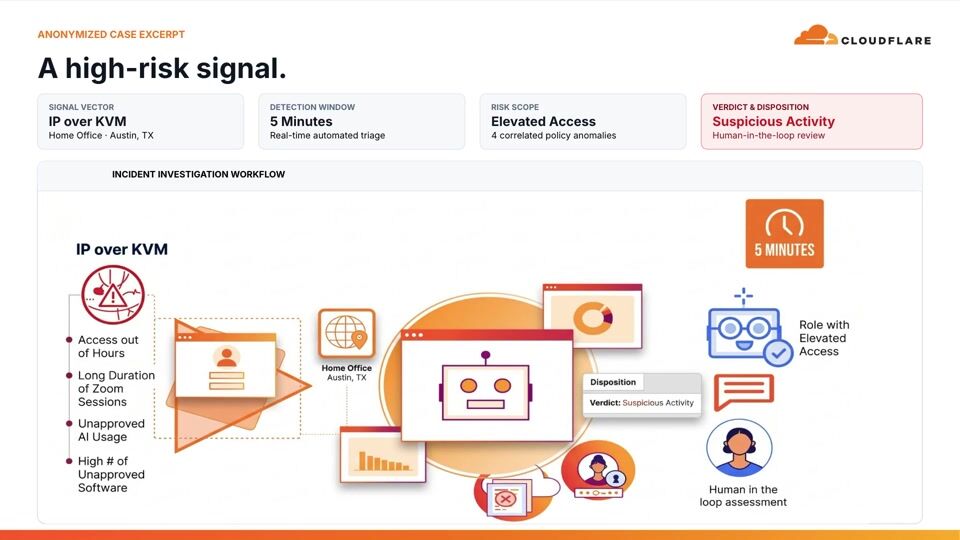
1:59Product security, bug bounty, you saw me talk about the 500% increase. A lot of that is automated. Vulnerability management, most of the middle tier stuff is automated. Instant response, we have an agentic SOC we built.
2:15We're probably a couple minutes per average case, and then if it gets longer. more complicated it's still minutes not hours which is really good i think our average um it'll pop up but it's it's i do it every quarter and we have our board meeting tomorrow for about 30 minutes time to respond across the board um and i think that's impressive i heard it i heard a vendor tell me well we do it in two minutes i'm like how do you do in two minutes i'm not sure you that's interesting grc 70% of our controls are automated. And we just rolled out a new GRC tool that we built in-house.
2:56Red Team, you just kind of heard me talk about the, we have the harness. Anybody read the blogs that we've created? I should read them. Dan, is Dan here? Dan's not here. And Albert wrote most of that.
3:12And across the board, we have an architecture agent that looks at all M&A activity. It looks at all project requests. And so even when we had a 30 % layoff, I'm seeing about an 8x growth in output from the team, which is pretty interesting. And so what I think, right, is security work got faster because of this. And these were some of the statistics that we do. Even in the changes of vulnerabilities, even the number of CVEs, all the things that have happened, RSLA compliance is... at 98% of what it's supposed to be. What my ideal is, it's at 98%. So we missed 2% of the time, which I've never had that in my career. And I've worked in some very large places. 80% reduction in incident response.
4:00And then what I just mentioned, 80, 70% of all of our controls in GRC are tested and automated. And so the thing that I think about this, right, is, and this is the, it didn't get just. faster it's more precise it's better we're scaling the the pyramid and i'll show you the pyramid in a second but but what i think is interesting is everybody talks about like governance right and i think we aren't thinking about this always right and i was at this world 50 event a couple weeks ago here and a couple cissos said well but you're actually using ai i said well what are you supposed to do Well, we're supposed to make sure we're secure in AI. I said, yes, but you have to enable your organizations to move forward, right?
4:49Because if we're not doing it, the attackers will, right? We saw that. We're seeing the increase in agents to 60% of the internet. It's getting quicker. And if we don't use that technology to our advantage, we will lose 100% of the time. But from what the team has done, we've seen it, right? We've seen it firsthand notion. of what's there and I think that's super impressive even this is the mythos thing of how do we think about the historical view of vulnerabilities the 41 if you read the blog we had 41 kind of exploitable vulnerabilities that we found out of mythos I think the red team I didn't tell you that it's not in this slide because we just built it there's about 13 were vulnerabilities that nothing saw right nobody bugged on it and see them, pentest and see them.
5:36The static and source analysis didn't see it. And so when I think about this, we're finding things that aren't there. Now, what I just mentioned before was the bug bounty started to find these real -time things. That's why we did the change with what Mythos didn't find, which was now the bug bounty real-time things, because people are taking the frontier models and using them against us, right? Now they're following good bug bounty programs. We had, we released a blog about one last week or the week before, but it's important because they're actually, they were really top-notch researchers. One was a friend because he called them like, how did he do that? That's interesting. I had a long conversation with him, but he's a kind of a world-class researcher that found one of the cross-tenant vulnerabilities that we had.
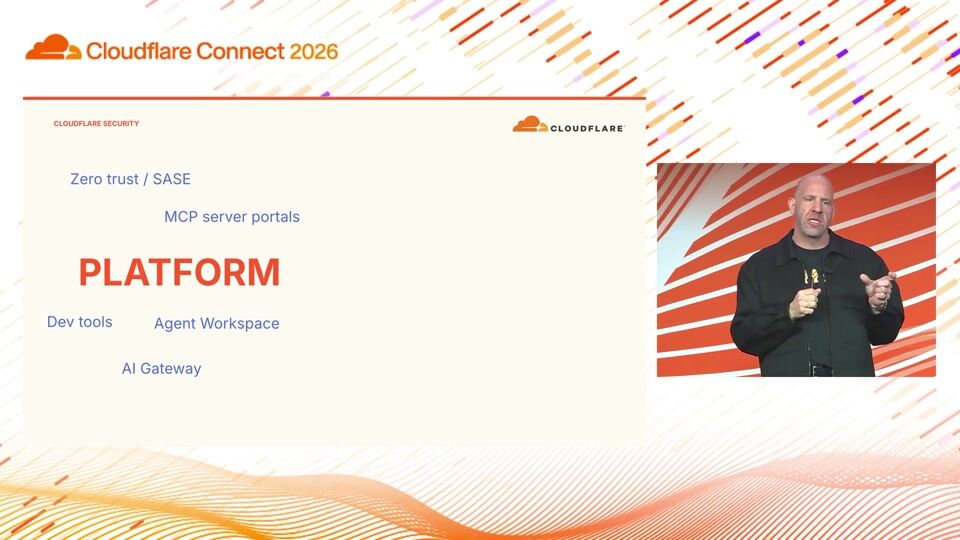
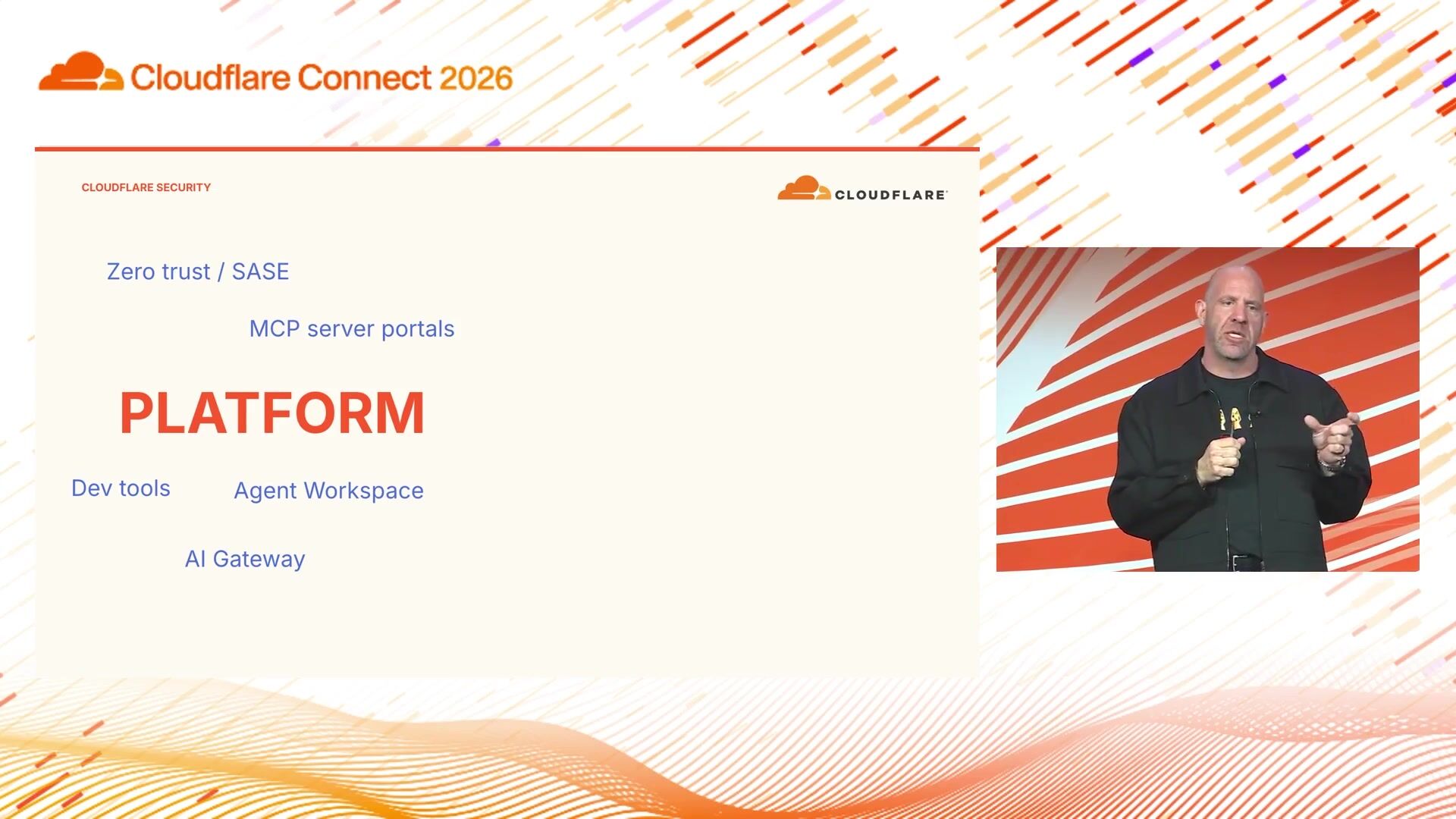
6:26And so when I think about that, that was what was powerful about AI or finding these things that are there. now we have two maybe three people working on our harnesses um which is pretty interesting you don't need an army of people to do this you need direction you need a platform and we'll talk about that but the things that we found and you just is that we're finding the things that are invisible because if we don't find these now um somebody else will i'm confident in that we're seeing too much scanning we're seeing too much in the bug bounty people want their money the one thing that i think is interesting uh um watch your bug bounty um t's and c's because the researchers are really excited to publish um that's something that we've seen and so we're trying to help them we have a 90 day kind of bug bounty program but they're really excited to publish because they want to find the things that are out there so i think you know that's the the skeptics but like do we do this right what is what is the structure of it gives us and you just heard me talk about the zero trust stuff and i'm not i was the product kind of person today about zero trust but you have to have a platform and i've never been a zero trust fan like just vpn right isn't that what zero trust is for the last 20 years it was a white paper that microsoft created and then we're supposed to apply it and then we came out with a an analyst report this
7:57said you need zero trust and it became a platform. But for agents, it changes the game because everything that we're doing is based on the platform. And I think this is where I think about it. And I go into a lot of companies and they talk to me, well, how did you do this? And this is the answer, right? Who has more than 10 AI tools trying to govern your AI processes? Somebody got, does anybody have any AI tools? Is there a lot of them? You guys are going to get you, we've got to get you, we're excited. That was a terrible joke, but I think that's the thing is we built this for us, 100 % rebuilt this for us. And we had problems with like, how do you control access to models?
8:44And I've seen a lot of companies build AI Gateway. We have it. We built it. We needed something to control the model. models, zero trust plugs in the access. So I can give anybody in the company any access to the model. I can restrict them. I can read all their prompts. We have behavioral analytics around the prompts. Prompts are fascinating because people do all kinds of things in prompts, right? Then the next problem we had was MCP. Anybody have an MCP problem? We may have had an MCP problem for a little bit and we had to figure out a way to re-architect it. So now we have a portal that fronts in all over. MCP. Now, you can't get to any of the actual MCP services because it goes to the portal of Zero Trust controls it, which is super interesting. Same thing with skills. How do we share skills?
9:29That's why Cloudflare asked you to sort of see him talk about it, is a way to drive reusable components. And I think that was what set us free. And when we drove that change, we saw open up. And I think that was- Super fascinating. And so the second one is enable it. And I was talking to a good friend of mine, big CISO in Australia, and she's like, we have Mythos. And we put it in AWS and a VPC, and there were seven people that got access. I said, then what are you going to do with it?
10:09I'm like, you can't do it. You're not going to, nobody's going to let you pull it back. And I said, you have to have a platform. You have to enable the organization to go forward. and it was fascinating to watch. And when we did it,
10:24what was interesting was they, in 20 years of being a CISO, anybody a CISO here? Do they listen to you, your team? Sometimes, that's about right, about half the time. So when I say, go do these 10 things, they say, no, I'm gonna do these three, right? That's what they do all the time. And it's been like that for 20 years, I never understood why. and now I do. And when we put the platform in, we gave them access to things, they started to do things for themselves. I had a product in VM. I went to lunch when I was in London and he's like, hey, I automated this thing that was an hour. Like, that seems like a waste. He's like, I automated this other thing. It was two hours. I'm like, that seems like a waste. And for two or three months, they automated all the stuff we hate doing.
11:13strategic to me at all um and i was like well this is interesting and then i saw the magic after about two months they started to build things like hey we're replacing our grc tool well that's interesting um hey we're building an autonomous red team thing that's cool i know you wanted to do that hey we found this new way to use the harness that's interesting hey we automated these controls you And what we saw was this enablement and traction that I've never seen in my entire career. I think we're doing more work here at Cloudflare than I did at HSBC. And I had 1,500 people in a billion dollar budget. I could do anything I wanted, but I couldn't get people to work hard because there were so many bureaucratic things that I had needed to be automated and I needed people.
12:04And the team just started doing things. Henry, who's over here, like built whole behavioral analytics application. I don't know how he did that. You can ask him. And he's fascinating. And it wasn't constrived. It was, we have a problem and we solved it. But the foundation was having this platform that I didn't have to worry about it and say, you go do it. Go forth and conquer and do it. And what was fascinating about this, like, we're going to be able to do that. And I've thought pretty hard about this, about when we build things, who likes to argue over architecture at AWS or Google or Azure about what the VPC and what firewall should we use?
12:51And like, should we cloud data or should we use Cloudflare? How many of those conversations have we had a thousand times, right? And what I didn't fully comprehend as we did this was it was easy. And so if you watched Fabian go on stage earlier with Lovable, literally it's that easy. What we did was we took this architecture and compute and storage and data and all these things that take forever and we argue about, and then 30 levels of control meetings and all the things that go on, and then everybody telling us no. And we built the workers' platform to say exactly what Fabian did. If I want to go big, build an automation for something, I do it, push it, it's ready. If you haven't done it, it's quite impressive.
13:42And you can do it, I mean, we could go build, like you just saw Fabian build a website live on a keynote in what, what do you say, 40 seconds? And you can do this with anything in security. You can build anything, right? But the constructs of having gateways and MCP portals, authentication through. gta is wildly successful because we we needed to be able to see that um and so like when we built the autonomous sock like i would build an autonomous sock i'll talk about that in a second but like we built it over a time of six months and and i think this is the question like how do i start doing this um because i think everybody should do this to be able to learn and to be able to drive it and i think like let's take the SOC is an example.
14:30Like, I think when we started the SOC, the first workflow was kind of silly. Like, what happened overnight? Does anybody want to know? Has anybody got three SOCs and you're not sure what happened overnight? That's usually one of the problems. And then like, hey, this report was really good. Let's actually do this for handoffs. So now we can see what handoffs and work's done and we automate it. Then we're like, well, if we can do this, we can actually some of our workflows. Let's summarize one. Well, let's hook this into all of our former cases. Let's hook it into threat models. Let's hook it into our documentation, right? And what ultimately happened, right, is we took a little piece of this every time.
15:15You can't just say, like, you could probably do it. It'd be a big mess. Go build up, like, go ask Claude or whoever, Kimmy, to build an autonomous sock. What would happen? I would never do that because I don't know what it's going to build. But if you give it in the instructions like we did in very small units, it actually works. And then you end up building things to where it was. If you talk to Henry and he says, how did you build behavioral analytics? It wasn't like, I want to build a behavioral analytics for all the data that we have in this organization and hook it into all these systems and work the magic. That might, I'm not sure what that would do. It kind of scares me, but it was each individual system we brought online and thought about.
16:01When we did our provisioning and deprovisioning agents, and that's something we do. We built an agent, got 95 % of everything to be able to do for any application, and then we customize each one, and now we roll them out every couple of days. And it's impressive. And how do we do that, right? You learn to build these capabilities and move. it forward with the team. But if they don't have that flexibility, they don't know. And the one thing I always think from a security standpoint is we actually are pretty smart. I don't know if you guys know that. I'm not. That's what the team tells me. But the team we have is very inquisitive. They're very curious. I think they're probably a little lazy. I'm kind of lazy. I don't want to do something.
16:47Does anybody want to look at vulnerability reports? all day no does anybody want to have a meeting with with all the business owners to talk about the vulnerabilities they have who loves that there's got to be somebody loves sitting on there telling them no we built an escalation agent you do yeah but like nobody wants it's horrible worse like waste how we got to 98 and i've always been at 95 of my sla to get to 98 we built an escalation agent stupid as that sounds, like silly escalation agent, that when the vulnerability comes, it says, you have a vulnerability, you have 30 days to fix your vulnerability, and I'm going to track you for a vulnerability. And we watch it and get status in real time at any point in time where it is, and then it escalates.
17:37So the reality was, it wasn't people that chose not to fix it, they just kind of forgot And so we have these meetings every month or every week, and somebody sits down with them and we just talk. It took it off the table, moved almost 4 % from an SLA standpoint. Very silly, but how much time were you creating to build the vulnerability reports, right? To aggregate the data, to sit down with people, all going. And I think that was what, when we did this, is anybody could do it. Now, I have five escalation agents, and we will re -architect it because we have. one around controls when we did when we did our kind of riff um we lost control owners well we had an agent that watched control owners if they were to leave the company and if a control owner left the company it would flag us to say you need to make sure somebody else owns that control because that's the quickest way to blow your socks compliance right and get your cfos mad at you or blow your your fed ramp compliance very simple and that was something i was super proud of even in the control i don't have that that we maintained our control compliance even with a 30 -ish percent layoff.
18:48And that was the power of what the team did. I never said ever, like build an escalation agent, go build a new GRC tool. I never go build behavioral analytics, right? And, but that's what we were seeing, right? The benefits were interesting and it wasn't being driven from me. It was this authentic. kind of component that changed the way the program worked you know we have our controls and we have threat-based controls and we have this thing that i'll show you in a second but it's it's it was driven from the team being smart i didn't have to dictate what it was they know what vulnerability management should look like they just can't get there and i think that's what's interesting and this is this chart i've used i think i created this at hsbc on like 80 of All breaches are a result of poor foundational controls, 15 % around proactive and 5 % predictive.
19:46What this has allowed us to do is to focus on the top piece. So how do we actually focus on behavioral analytics? How do we focus on building a world-class harness? How do we focus on building an autonomous red team? Why did we build the GRC tool? Sounds kind of silly. Because GRC tools are dynamic. dinosaurs. The agent should read what's in the GRC tool to understand what the control is. Can your GRC tool do that? No. We have too many agents, too many things that we needed to be able to do it. Can it store the evidence the way that we want it to, right? We're driving everything agentically. I can't wait for a vendor to do it, right? We replaced our EDR on our cord edge. We're running our own. I think we have a session on this.
20:36I think if you see Derek Pitts he's one that I could do it you could talk to him about it but it saved us millions of dollars and for us and I wouldn't always recommend that we send a one runs on our workstations but for us our edge and core there's basically eight operating systems the software is our stack and I know exactly what's running on it and so it's why do I want to take the overhead and the amount of cost with when I know what I'm looking for and that allows us to focus on these big pieces which I think is which which is there and as we go through it even the bug bounty program you know like how do you automate a bug bounty program well does the research give you everything that you want to know about the vulnerability yes because they want to get paid well what if I read that in there's the agent and then validated against source code and valid against the threat model validated against old bugs you probably get it today right you don't need this triage agents you'll be 90 percent um and the last time i looked it cost me 58 to do that i used a cheaper model i don't need opus 55 i'll leave daybreak i don't even met those to do that because they gave me everything i needed to know they gave me the exploit code they gave me all that stuff seems like an easy thing to do to take that work off i think that saved us we we saved we had some outsourced on that and we got rid of the outsourcer about a half million bucks so even
22:10in the two things i just told you that we did the the cross track replacement and the um this one were probably three million dollar savings this year four million dollars which is pretty impressive and not just cost that's not actually changing how we view the threat landscape um and and it's you know actually one of the other things albert built it i don't even know albert built it it just started showing up called licorice and it looks at every application that goes into production and he scans it and so he knows what it's doing i didn't tell him to do that
22:47pretty cool right and the smart people that you have will do things that are super interesting right and so like i always think this um that like we always knew what good work would look like we know what it is if we sit there and say how do you want to go design something the problem is like we couldn't do it effectively we couldn't do it at scale because we never had the tools does everybody like i bet you everybody in this room could write a vulnerability management workflow
23:25relatively easy now implementing it with different tools and aggregating things and hooking all these other third parties in is tough but why do you need to do that now like i can build that in that's easy and it's simple and so what what when we kind of go back to this it's like we do this why can't you right it's it's very simple to allow you to do it because it goes back to you have to have a platform to support it. Now that's just secure you, right?
23:57One of my other fun things, my admin, She's right here somewhere. She runs AI on my calendar and I get interactions with it all the time.
24:11My finance person built an application for a 2027 budgeting process. Now Chris doesn't know. he's not here is he but chris doesn't know anything about it like literally does not know anything and we inherited him he's a great guy about a year ago and he's like i don't know about this stuff and so with the platform he built an application that takes all of our budget information for 2026 25 24 and forecasting is 27 and then we interact with it like hey here's this invoice is it going to go up is it going to change what are you going to do you have this extra money how are you going to hire yourself But he put it in an application that he built himself that now took our planning from a month to a couple days.
24:59And that doesn't, you know, when I think about that, that's improvement in what we can do. Because if I don't have to do something, I can spend higher quality time on other things. So now I don't have to do an offsite. We're actually supposed to do an offsite this week and we're on budgeting, but we don't need to do it because Chris kind of solved that problem. like spreadsheets. I don't use spreadsheets anymore. It's all, we have probably 500 applications. Everybody has their own dashboard that they built just for themselves to run their business, which is fascinating. Dashboards are a problem. I guess I can tell you the secret about dashboards. You probably need a dashboard, a dashboard. So we use something called Exponent that summarizes dashboards. But if I'm a GRC analyst working on a set of controls, I want my own. I don't need all 450 controls that we have.
25:47I need these 75 that I'm going to watch very closely. I can build a dashboard for that. I don't need to see that. My VP doesn't need to see that, but we need to see the aggregation and the roll-up of it, right? And what's fascinating about this is that now AI dashboards, all of that can be done in minutes, which I think is the thing. And so the thing I think about is how do we like, as practitioners, use this to move forward. And if you don't, you're gonna be behind. And the thing that I always get frustrated in is, I go out to a company and they're like, well, we can't figure out what model you wanna use. Well, like, you have to find a way in an ecosystem to do it.
26:33And you can't put 25 vendors in there because what you're doing is you're dealing with the problem of 10 years ago. versus the problem of today, which is how do I enable to support my business and protect the business from a security and enablement standpoint? And that's where we gotta be. And it's quite amazing to watch.
26:52And it allows me to do things. And one of the things, I don't think we're doing it this time, but if you are interested, you probably reach out to your AE. We're doing build sessions because what I think is, until you see it as leaders, if you're a CISO, so if you can't do it, then, like, why is your team going to do it? And in February, the thing I did was I built a couple apps, and I said, look what I did. You guys didn't do this. Why am I building apps as a CISO? I'm the stupid one, right? And they're like, oh, granted, build is secure. It's not the right way. And it challenged them. And then they don't let me build apps that much. But I have a couple that I use. Like, I have a CISO agent that we've built that kind of summarizes everything for me. But the workshops are meant to give you a glimpse into how to do this.
27:43And I think that for me is what I result out of it is because to argue over architecture, to argue over what database, to argue over all that means nothing from a security posture standpoint. It doesn't make us secure because I'm using cloud native firewall or cloud native versus some sort of other firewall. That doesn't make anything better. What makes you better is that improvement up the pyramid, and I think that's the cool thing.
Christopher O'Rourke, Craig Strubhart
Cloudflare
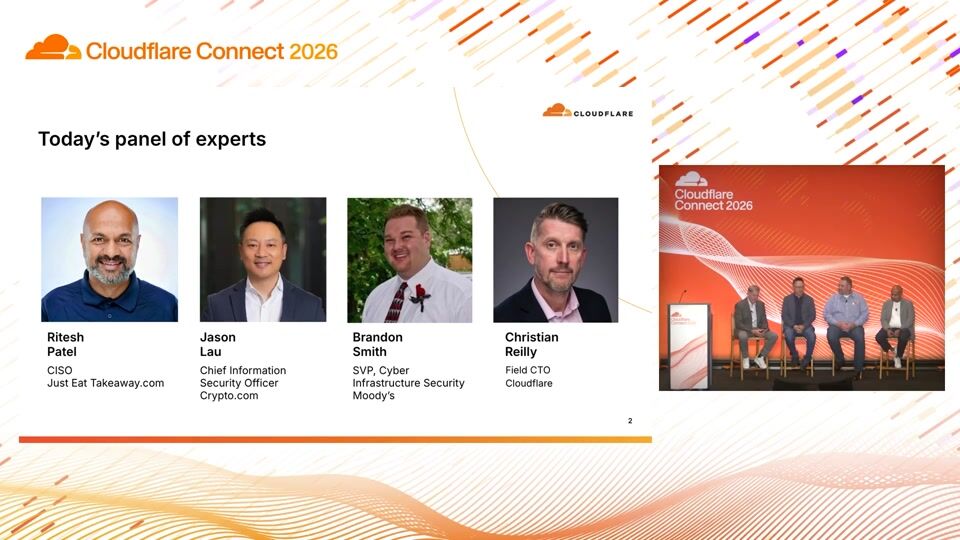
Jason Lau, Ritesh Patel
Crypto.com · Just Eat Takeaway.com
Tyler Greenfield
SentinelOne
Be the first to know when registration opens and the agenda goes live.
---
title: "Cyber frontier models: How AI is transforming Cloudflare’s security team"
url: "https://www.cloudflare.com/connect/2026/session/cyber-frontier-models-how-ai-is-transforming-cloudflares-security-team"
year: 2026
---

# Cyber frontier models: How AI is transforming Cloudflare’s security team

[Watch session](https://www.cloudflare.com/connect/2026/session/cyber-frontier-models-how-ai-is-transforming-cloudflares-security-team)

## Session details

- **Track:** Security & Compliance
- **Topics:** AI transformation, Security modernization & zero trust, SecOps & automation
- **Solution areas:** SASE & Workspace Security (Cloudflare One), Developer Platform, Core Platform, Network & Threat Services

## About this session

Cloudflare’s security team looks different than it did a year ago. More than 200 agents are now running work that used to be manual, our staff members spend their time differently, and the way we make security decisions has changed. In this session, we share what we’ve actually built, what we’ve learned shipping agents into production, and what’s changed about how the team works. It’s a customer zero look from inside Cloudflare security.

## Speakers

- [Grant Bourzikas](https://www.cloudflare.com/connect/speakers/2465227) — Chief Security Officer, Cloudflare

## Transcript

[0:03] I'm Graham Porzikas. I'm the chief security officer. What today is about is really about what we're doing internal. And so we actually have some internal people here too that I can introduce you as well. We all know what's going on with AI, right? I think this is my, you know, the world is ending, right? All these attackers are, you just saw me talk about the 310 billion attacks that we're seeing every day. I always kid about this slide because I'm like, your model has not broken out of the sandbox. It's not very good. So now I don't know if that's because of the user issue or it's a model issue. I tend to think it's a user issue, but I think, you know, this is, this is kind of the mantra that we hear is like the attacks are coming. We're going to get, they're going to get us. And you know, there's a lot of, and even, even the last few weeks I've attended a bunch of security events and like every vendor's telling you all the things that are going to get you.

[0:59] So let me tell you any good things. So today's about good. So, and I think this is the thing, like the tackers will always be ahead, right? Well, my view, not anymore. Um, I got two people at this table that would vouch for that. Um, two of my best. And, um, and, and I think what's interesting about this is the first time in my career, I feel really good about things. And I've been a CISO since 2000. three this is my seventh CISO job that means I'm old or I have the average tenure of a CISO which is like three years so I'm at almost four with Cloudflare but but I think what's interesting is like it's I actually feel very optimistic with what you can do now I just said this before we have 100 % of my team in security is using AI now that number's wrong it's 450 But we have 450 agents, skills files, harnesses in the organization, and we've automated many of these things.

[1:59] Product security, bug bounty, you saw me talk about the 500% increase. A lot of that is automated. Vulnerability management, most of the middle tier stuff is automated. Instant response, we have an agentic SOC we built.

[2:15] We're probably a couple minutes per average case, and then if it gets longer. more complicated it's still minutes not hours which is really good i think our average um it'll pop up but it's it's i do it every quarter and we have our board meeting tomorrow for about 30 minutes time to respond across the board um and i think that's impressive i heard it i heard a vendor tell me well we do it in two minutes i'm like how do you do in two minutes i'm not sure you that's interesting grc 70% of our controls are automated. And we just rolled out a new GRC tool that we built in-house.

[2:56] Red Team, you just kind of heard me talk about the, we have the harness. Anybody read the blogs that we've created? I should read them. Dan, is Dan here? Dan's not here. And Albert wrote most of that.

[3:12] And across the board, we have an architecture agent that looks at all M&A activity. It looks at all project requests. And so even when we had a 30 % layoff, I'm seeing about an 8x growth in output from the team, which is pretty interesting. And so what I think, right, is security work got faster because of this. And these were some of the statistics that we do. Even in the changes of vulnerabilities, even the number of CVEs, all the things that have happened, RSLA compliance is... at 98% of what it's supposed to be. What my ideal is, it's at 98%. So we missed 2% of the time, which I've never had that in my career. And I've worked in some very large places. 80% reduction in incident response.

[4:00] And then what I just mentioned, 80, 70% of all of our controls in GRC are tested and automated. And so the thing that I think about this, right, is, and this is the, it didn't get just. faster it's more precise it's better we're scaling the the pyramid and i'll show you the pyramid in a second but but what i think is interesting is everybody talks about like governance right and i think we aren't thinking about this always right and i was at this world 50 event a couple weeks ago here and a couple cissos said well but you're actually using ai i said well what are you supposed to do Well, we're supposed to make sure we're secure in AI. I said, yes, but you have to enable your organizations to move forward, right?

[4:49] Because if we're not doing it, the attackers will, right? We saw that. We're seeing the increase in agents to 60% of the internet. It's getting quicker. And if we don't use that technology to our advantage, we will lose 100% of the time. But from what the team has done, we've seen it, right? We've seen it firsthand notion. of what's there and I think that's super impressive even this is the mythos thing of how do we think about the historical view of vulnerabilities the 41 if you read the blog we had 41 kind of exploitable vulnerabilities that we found out of mythos I think the red team I didn't tell you that it's not in this slide because we just built it there's about 13 were vulnerabilities that nothing saw right nobody bugged on it and see them, pentest and see them.

[5:36] The static and source analysis didn't see it. And so when I think about this, we're finding things that aren't there. Now, what I just mentioned before was the bug bounty started to find these real -time things. That's why we did the change with what Mythos didn't find, which was now the bug bounty real-time things, because people are taking the frontier models and using them against us, right? Now they're following good bug bounty programs. We had, we released a blog about one last week or the week before, but it's important because they're actually, they were really top-notch researchers. One was a friend because he called them like, how did he do that? That's interesting. I had a long conversation with him, but he's a kind of a world-class researcher that found one of the cross-tenant vulnerabilities that we had.

[6:26] And so when I think about that, that was what was powerful about AI or finding these things that are there. now we have two maybe three people working on our harnesses um which is pretty interesting you don't need an army of people to do this you need direction you need a platform and we'll talk about that but the things that we found and you just is that we're finding the things that are invisible because if we don't find these now um somebody else will i'm confident in that we're seeing too much scanning we're seeing too much in the bug bounty people want their money the one thing that i think is interesting uh um watch your bug bounty um t's and c's because the researchers are really excited to publish um that's something that we've seen and so we're trying to help them we have a 90 day kind of bug bounty program but they're really excited to publish because they want to find the things that are out there so i think you know that's the the skeptics but like do we do this right what is what is the structure of it gives us and you just heard me talk about the zero trust stuff and i'm not i was the product kind of person today about zero trust but you have to have a platform and i've never been a zero trust fan like just vpn right isn't that what zero trust is for the last 20 years it was a white paper that microsoft created and then we're supposed to apply it and then we came out with a an analyst report this

[7:57] said you need zero trust and it became a platform. But for agents, it changes the game because everything that we're doing is based on the platform. And I think this is where I think about it. And I go into a lot of companies and they talk to me, well, how did you do this? And this is the answer, right? Who has more than 10 AI tools trying to govern your AI processes? Somebody got, does anybody have any AI tools? Is there a lot of them? You guys are going to get you, we've got to get you, we're excited. That was a terrible joke, but I think that's the thing is we built this for us, 100 % rebuilt this for us. And we had problems with like, how do you control access to models?

[8:44] And I've seen a lot of companies build AI Gateway. We have it. We built it. We needed something to control the model. models, zero trust plugs in the access. So I can give anybody in the company any access to the model. I can restrict them. I can read all their prompts. We have behavioral analytics around the prompts. Prompts are fascinating because people do all kinds of things in prompts, right? Then the next problem we had was MCP. Anybody have an MCP problem? We may have had an MCP problem for a little bit and we had to figure out a way to re-architect it. So now we have a portal that fronts in all over. MCP. Now, you can't get to any of the actual MCP services because it goes to the portal of Zero Trust controls it, which is super interesting. Same thing with skills. How do we share skills?

[9:29] That's why Cloudflare asked you to sort of see him talk about it, is a way to drive reusable components. And I think that was what set us free. And when we drove that change, we saw open up. And I think that was- Super fascinating. And so the second one is enable it. And I was talking to a good friend of mine, big CISO in Australia, and she's like, we have Mythos. And we put it in AWS and a VPC, and there were seven people that got access. I said, then what are you going to do with it?

[10:09] I'm like, you can't do it. You're not going to, nobody's going to let you pull it back. And I said, you have to have a platform. You have to enable the organization to go forward. and it was fascinating to watch. And when we did it,

[10:24] what was interesting was they, in 20 years of being a CISO, anybody a CISO here? Do they listen to you, your team? Sometimes, that's about right, about half the time. So when I say, go do these 10 things, they say, no, I'm gonna do these three, right? That's what they do all the time. And it's been like that for 20 years, I never understood why. and now I do. And when we put the platform in, we gave them access to things, they started to do things for themselves. I had a product in VM. I went to lunch when I was in London and he's like, hey, I automated this thing that was an hour. Like, that seems like a waste. He's like, I automated this other thing. It was two hours. I'm like, that seems like a waste. And for two or three months, they automated all the stuff we hate doing.

[11:13] strategic to me at all um and i was like well this is interesting and then i saw the magic after about two months they started to build things like hey we're replacing our grc tool well that's interesting um hey we're building an autonomous red team thing that's cool i know you wanted to do that hey we found this new way to use the harness that's interesting hey we automated these controls you And what we saw was this enablement and traction that I've never seen in my entire career. I think we're doing more work here at Cloudflare than I did at HSBC. And I had 1,500 people in a billion dollar budget. I could do anything I wanted, but I couldn't get people to work hard because there were so many bureaucratic things that I had needed to be automated and I needed people.

[12:04] And the team just started doing things. Henry, who's over here, like built whole behavioral analytics application. I don't know how he did that. You can ask him. And he's fascinating. And it wasn't constrived. It was, we have a problem and we solved it. But the foundation was having this platform that I didn't have to worry about it and say, you go do it. Go forth and conquer and do it. And what was fascinating about this, like, we're going to be able to do that. And I've thought pretty hard about this, about when we build things, who likes to argue over architecture at AWS or Google or Azure about what the VPC and what firewall should we use?

[12:51] And like, should we cloud data or should we use Cloudflare? How many of those conversations have we had a thousand times, right? And what I didn't fully comprehend as we did this was it was easy. And so if you watched Fabian go on stage earlier with Lovable, literally it's that easy. What we did was we took this architecture and compute and storage and data and all these things that take forever and we argue about, and then 30 levels of control meetings and all the things that go on, and then everybody telling us no. And we built the workers' platform to say exactly what Fabian did. If I want to go big, build an automation for something, I do it, push it, it's ready. If you haven't done it, it's quite impressive.

[13:42] And you can do it, I mean, we could go build, like you just saw Fabian build a website live on a keynote in what, what do you say, 40 seconds? And you can do this with anything in security. You can build anything, right? But the constructs of having gateways and MCP portals, authentication through. gta is wildly successful because we we needed to be able to see that um and so like when we built the autonomous sock like i would build an autonomous sock i'll talk about that in a second but like we built it over a time of six months and and i think this is the question like how do i start doing this um because i think everybody should do this to be able to learn and to be able to drive it and i think like let's take the SOC is an example.

[14:30] Like, I think when we started the SOC, the first workflow was kind of silly. Like, what happened overnight? Does anybody want to know? Has anybody got three SOCs and you're not sure what happened overnight? That's usually one of the problems. And then like, hey, this report was really good. Let's actually do this for handoffs. So now we can see what handoffs and work's done and we automate it. Then we're like, well, if we can do this, we can actually some of our workflows. Let's summarize one. Well, let's hook this into all of our former cases. Let's hook it into threat models. Let's hook it into our documentation, right? And what ultimately happened, right, is we took a little piece of this every time.

[15:15] You can't just say, like, you could probably do it. It'd be a big mess. Go build up, like, go ask Claude or whoever, Kimmy, to build an autonomous sock. What would happen? I would never do that because I don't know what it's going to build. But if you give it in the instructions like we did in very small units, it actually works. And then you end up building things to where it was. If you talk to Henry and he says, how did you build behavioral analytics? It wasn't like, I want to build a behavioral analytics for all the data that we have in this organization and hook it into all these systems and work the magic. That might, I'm not sure what that would do. It kind of scares me, but it was each individual system we brought online and thought about.

[16:01] When we did our provisioning and deprovisioning agents, and that's something we do. We built an agent, got 95 % of everything to be able to do for any application, and then we customize each one, and now we roll them out every couple of days. And it's impressive. And how do we do that, right? You learn to build these capabilities and move. it forward with the team. But if they don't have that flexibility, they don't know. And the one thing I always think from a security standpoint is we actually are pretty smart. I don't know if you guys know that. I'm not. That's what the team tells me. But the team we have is very inquisitive. They're very curious. I think they're probably a little lazy. I'm kind of lazy. I don't want to do something.

[16:47] Does anybody want to look at vulnerability reports? all day no does anybody want to have a meeting with with all the business owners to talk about the vulnerabilities they have who loves that there's got to be somebody loves sitting on there telling them no we built an escalation agent you do yeah but like nobody wants it's horrible worse like waste how we got to 98 and i've always been at 95 of my sla to get to 98 we built an escalation agent stupid as that sounds, like silly escalation agent, that when the vulnerability comes, it says, you have a vulnerability, you have 30 days to fix your vulnerability, and I'm going to track you for a vulnerability. And we watch it and get status in real time at any point in time where it is, and then it escalates.

[17:37] So the reality was, it wasn't people that chose not to fix it, they just kind of forgot And so we have these meetings every month or every week, and somebody sits down with them and we just talk. It took it off the table, moved almost 4 % from an SLA standpoint. Very silly, but how much time were you creating to build the vulnerability reports, right? To aggregate the data, to sit down with people, all going. And I think that was what, when we did this, is anybody could do it. Now, I have five escalation agents, and we will re -architect it because we have. one around controls when we did when we did our kind of riff um we lost control owners well we had an agent that watched control owners if they were to leave the company and if a control owner left the company it would flag us to say you need to make sure somebody else owns that control because that's the quickest way to blow your socks compliance right and get your cfos mad at you or blow your your fed ramp compliance very simple and that was something i was super proud of even in the control i don't have that that we maintained our control compliance even with a 30 -ish percent layoff.

[18:48] And that was the power of what the team did. I never said ever, like build an escalation agent, go build a new GRC tool. I never go build behavioral analytics, right? And, but that's what we were seeing, right? The benefits were interesting and it wasn't being driven from me. It was this authentic. kind of component that changed the way the program worked you know we have our controls and we have threat-based controls and we have this thing that i'll show you in a second but it's it's it was driven from the team being smart i didn't have to dictate what it was they know what vulnerability management should look like they just can't get there and i think that's what's interesting and this is this chart i've used i think i created this at hsbc on like 80 of All breaches are a result of poor foundational controls, 15 % around proactive and 5 % predictive.

[19:46] What this has allowed us to do is to focus on the top piece. So how do we actually focus on behavioral analytics? How do we focus on building a world-class harness? How do we focus on building an autonomous red team? Why did we build the GRC tool? Sounds kind of silly. Because GRC tools are dynamic. dinosaurs. The agent should read what's in the GRC tool to understand what the control is. Can your GRC tool do that? No. We have too many agents, too many things that we needed to be able to do it. Can it store the evidence the way that we want it to, right? We're driving everything agentically. I can't wait for a vendor to do it, right? We replaced our EDR on our cord edge. We're running our own. I think we have a session on this.

[20:36] I think if you see Derek Pitts he's one that I could do it you could talk to him about it but it saved us millions of dollars and for us and I wouldn't always recommend that we send a one runs on our workstations but for us our edge and core there's basically eight operating systems the software is our stack and I know exactly what's running on it and so it's why do I want to take the overhead and the amount of cost with when I know what I'm looking for and that allows us to focus on these big pieces which I think is which which is there and as we go through it even the bug bounty program you know like how do you automate a bug bounty program well does the research give you everything that you want to know about the vulnerability yes because they want to get paid well what if I read that in there's the agent and then validated against source code and valid against the threat model validated against old bugs you probably get it today right you don't need this triage agents you'll be 90 percent um and the last time i looked it cost me 58 to do that i used a cheaper model i don't need opus 55 i'll leave daybreak i don't even met those to do that because they gave me everything i needed to know they gave me the exploit code they gave me all that stuff seems like an easy thing to do to take that work off i think that saved us we we saved we had some outsourced on that and we got rid of the outsourcer about a half million bucks so even

[22:10] in the two things i just told you that we did the the cross track replacement and the um this one were probably three million dollar savings this year four million dollars which is pretty impressive and not just cost that's not actually changing how we view the threat landscape um and and it's you know actually one of the other things albert built it i don't even know albert built it it just started showing up called licorice and it looks at every application that goes into production and he scans it and so he knows what it's doing i didn't tell him to do that

[22:47] pretty cool right and the smart people that you have will do things that are super interesting right and so like i always think this um that like we always knew what good work would look like we know what it is if we sit there and say how do you want to go design something the problem is like we couldn't do it effectively we couldn't do it at scale because we never had the tools does everybody like i bet you everybody in this room could write a vulnerability management workflow

[23:25] relatively easy now implementing it with different tools and aggregating things and hooking all these other third parties in is tough but why do you need to do that now like i can build that in that's easy and it's simple and so what what when we kind of go back to this it's like we do this why can't you right it's it's very simple to allow you to do it because it goes back to you have to have a platform to support it. Now that's just secure you, right?

[23:57] One of my other fun things, my admin, She's right here somewhere. She runs AI on my calendar and I get interactions with it all the time.

[24:11] My finance person built an application for a 2027 budgeting process. Now Chris doesn't know. he's not here is he but chris doesn't know anything about it like literally does not know anything and we inherited him he's a great guy about a year ago and he's like i don't know about this stuff and so with the platform he built an application that takes all of our budget information for 2026 25 24 and forecasting is 27 and then we interact with it like hey here's this invoice is it going to go up is it going to change what are you going to do you have this extra money how are you going to hire yourself But he put it in an application that he built himself that now took our planning from a month to a couple days.

[24:59] And that doesn't, you know, when I think about that, that's improvement in what we can do. Because if I don't have to do something, I can spend higher quality time on other things. So now I don't have to do an offsite. We're actually supposed to do an offsite this week and we're on budgeting, but we don't need to do it because Chris kind of solved that problem. like spreadsheets. I don't use spreadsheets anymore. It's all, we have probably 500 applications. Everybody has their own dashboard that they built just for themselves to run their business, which is fascinating. Dashboards are a problem. I guess I can tell you the secret about dashboards. You probably need a dashboard, a dashboard. So we use something called Exponent that summarizes dashboards. But if I'm a GRC analyst working on a set of controls, I want my own. I don't need all 450 controls that we have.

[25:47] I need these 75 that I'm going to watch very closely. I can build a dashboard for that. I don't need to see that. My VP doesn't need to see that, but we need to see the aggregation and the roll-up of it, right? And what's fascinating about this is that now AI dashboards, all of that can be done in minutes, which I think is the thing. And so the thing I think about is how do we like, as practitioners, use this to move forward. And if you don't, you're gonna be behind. And the thing that I always get frustrated in is, I go out to a company and they're like, well, we can't figure out what model you wanna use. Well, like, you have to find a way in an ecosystem to do it.

[26:33] And you can't put 25 vendors in there because what you're doing is you're dealing with the problem of 10 years ago. versus the problem of today, which is how do I enable to support my business and protect the business from a security and enablement standpoint? And that's where we gotta be. And it's quite amazing to watch.

[26:52] And it allows me to do things. And one of the things, I don't think we're doing it this time, but if you are interested, you probably reach out to your AE. We're doing build sessions because what I think is, until you see it as leaders, if you're a CISO, so if you can't do it, then, like, why is your team going to do it? And in February, the thing I did was I built a couple apps, and I said, look what I did. You guys didn't do this. Why am I building apps as a CISO? I'm the stupid one, right? And they're like, oh, granted, build is secure. It's not the right way. And it challenged them. And then they don't let me build apps that much. But I have a couple that I use. Like, I have a CISO agent that we've built that kind of summarizes everything for me. But the workshops are meant to give you a glimpse into how to do this.

[27:43] And I think that for me is what I result out of it is because to argue over architecture, to argue over what database, to argue over all that means nothing from a security posture standpoint. It doesn't make us secure because I'm using cloud native firewall or cloud native versus some sort of other firewall. That doesn't make anything better. What makes you better is that improvement up the pyramid, and I think that's the cool thing.

## Related sessions

- [Rethinking insider risk for a workforce of people and agents](https://www.cloudflare.com/connect/2026/session/rethinking-insider-risk-for-a-workforce-of-people-and-agents)
- [Built differently, secured similarly?](https://www.cloudflare.com/connect/2026/session/built-differently-secured-similarly)
- [From the endpoint to the edge: Simplifying security in the AI era](https://www.cloudflare.com/connect/2026/session/from-the-endpoint-to-the-edge-simplifying-security-in-the-ai-era)

## More from Connect

- [All sessions](https://www.cloudflare.com/connect/)
- [Get notified for Connect 2027](https://www.cloudflare.com/connect#2027)


