Web Performance & Frameworks
Developer tooling in the agentic era

Evan You
Cloudflare
AI has already changed how individual developers write software. The bigger question is what it changes at the level of systems, teams, and strategy. This session is for developers and engineering leaders responsible for mature software. Using vinext, a cleanroom reimplementation of Next.js built in months, we explore how AI makes previously impractical rewrites possible, why test suites and conformance become strategic assets, and how teams can move quickly without losing control. Leave with a framework for finding the right opportunities and deciding when to maintain, modernize, or replace the software they depend on.
0:03My name is Steve Faulkner, Senior Director of Engineering here at Cloudflare. I'm at SouthpoolSteve on Twitter. And full disclosure, I did not write the title of this talk. An agent did. So about two months ago, they were like, Steve, what are you going to talk about at Connect? And I was like, dear agent, please write talk title for me and send to marketing team. And so this is what came out. So everybody buckle up, because this is actually the title of this talk. keep calm and slap fork on so as I said before I'm Steve Faulkner I'm a manager I manage like 120 people so I'm responsible for like workers and a bunch of our framework integration our CLI tools a bunch of our open source tooling don't really write code day-to-day these much that much anymore does everybody know what vNext is kind of maybe just like raise their hands do people know what this is okay not as many as I thought all right we'll give a little history right so X is this thing that I made last February and it started with a really simple question.
1:00So what if we rebuilt Next.js on Vite? If you don't know what Next.js is, it's pretty much the most popular front-end React framework. Apologies to the Tanstack people. Vite itself is the bundling tool that is used by most of the frameworks, but not Next.js notably. And so this is February of earlier this year, Opus 4.5 had just landed and I was like, what can AI do, right? this was less about actually this problem and more like how far can I push AI and fast forward about a week and we had launched it right so within one week we rebuilt the Next .js framework on top of Vite made a big splash on the internet a lot of people were very excited a lot of people were very mad and it coined this term that was not invented by me but I have since embraced called slot fork all right so people called it a slot fork of Next .js which is that took something that already existed I didn't actually fork Next.js, I re-implemented entirely, right?
1:55Next.js has a great test suite, it was very easy to re-implement with agents and only took, like I said, really was working in a couple of days and took a week to sort of polish it off. So this talk is about slot forks and sort of, you know, where things are going now. So this is back in February, this term is coined in February. Since then, what has happened? Well, everything is getting slot forks, TypeScript slot forks. This is actually TSRS, which was made by somebody else, but we just took ownership of. We got kind of donated to Cloudflare. There's a blog post about it today, if you haven't seen it. So Typeflix script got slot forked. React got slot forked. There's a slot fork by the Tansac guys called Redact. Veet itself got slot forked. Lovable, if you've seen them present here, they slot forked Veet itself into a thing called OJ.
2:46Bun slot forked itself. basically said we're going to rewrite our entire thing from zig into rust they did that very notably in july everybody said it was going to be impossible it wouldn't work and here it is working uh versell themselves who kind of you know coined slot fork they've slot forked bash uh people have slot forked uh postgres into rust pretty much every game on the planet got slot forked in the last like two weeks if you've been looking on twitter you want you want to play any game on any system now right you want to play like gamecube on your xbox you can probably do it right it's pretty wild so the whole world is basically nothing but slot forks now oh we did another slot fork don't show this to the cleft people but we basically slot fork jev into cleft which is like a new model by cloudflare uh i i kept coming up with examples the more i looked neon slot folk their own dashboard uh so people sought for gmail to work on cloudflare and that was pretty cool everything is a slot fork now and so um I feel sort of like morally responsible that I have, you know, create, I have this small thing I wanted to do and it sort of feels like it's spiraled out of control and I'm like dealing with the tension of like what happens now with this slot fork thing that I have like put out into the world and everybody I know has the same question which is when is Christopher Nolan going to make a movie about this, right?
4:06You know, morally torn characters trying to figure out what's going to happen. next who's gonna play me is it matt damon is it robert pattinson i promise i answer that that's the end of that joke um but it really is like i'm trying to figure out like i wanted to come into this and give people some kind of hope that like this is what's happening but here's what you can do about it right like here's what's actually going to happen so steve's first law of software engineering um nobody's said i can do that yet but here we go uh everything that can be slot forked will be slot for i think this is just true right i think like any piece of software that has an surface area is going to get rewritten or changed or re -implemented in something else if your customer doesn't like it they're going to do it if your internal people don't like it they're going to do it um if it's open source that it makes it a little bit easier but even look at all the decompiling happen right now photoshop got flopped work last week right like this is just what's going to happen to all software so what do we do i'm here to tell you that you basically just have to embrace it right like this is the world we're in now and so what are you about it we have to actually like embrace this world so i'm kind of giving you some like tools that i think will help solve this and i also regret to inform you this a lot of these problems are old problems like how do we build software that isn't sloppy is not a new problem we've been contending with this for like 20 years so the rest of this talk is going to be a little bit like eat your vegetables right like if you're coming here for like some grand like secret sauce about how to deal with slot fork software right that's not really it like we already have the tools write tests right
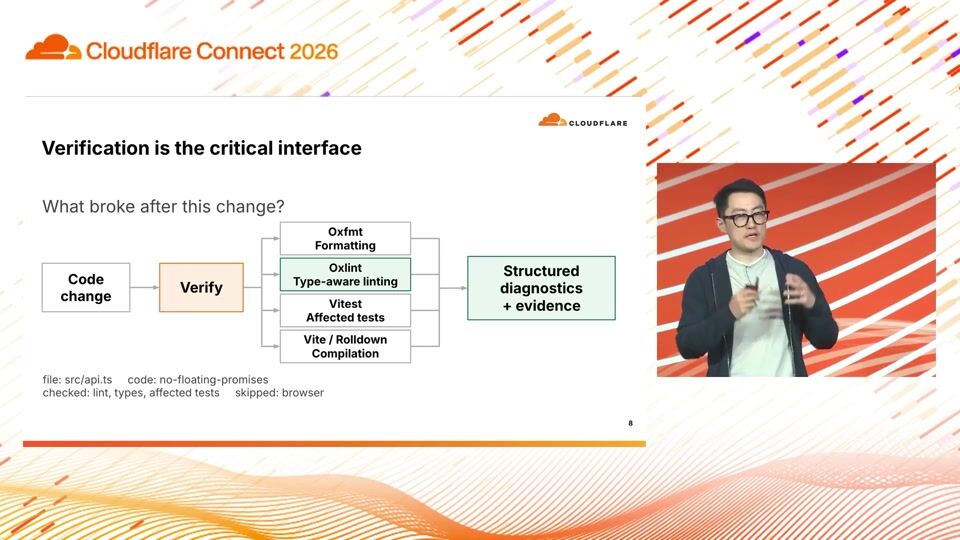
5:36like this is one of those things and the cool part is ai can help you with all this stuff right um tests have always been how we like build software that we have confidence in and can ship production to production um and ai can help you write more tests right if you're not already using ai to just add more tests to the observable surface area of your application or every product you should be doing that um by the way this starts in sort of the easy mode all the way into the hard mode um so i have to plug all of our stuff um if you want to write tests and like, I've never in a test before, check out vTest, because vTest is the thing that we now maintain that basically is a great testing framework. Type checking, I talked about TypeScript RS, so you can definitely check this out. We're good friends with the TypeScript team, and so this is, we're trying to do a very faithful reproduction of TypeScript in Rust, but basically do something that's faster and also serves other use cases like works in WASM, things like that.
6:28Oxlint, which we already have, is trying to be the best formatter, or sorry, best lyncher that you Aux Format, trying to be the best, fastest formatter can be. And if you want all of this packaged up into one thing, you can use Vite, which is the bundler that we now maintain as part of the Cloudflare team, and all this packaged up into a tool called Vite+. So if you're looking for, like, you walk out of this talk and you're like, how should I do this stuff to what Steve was talking about? Point your agent and say, set up Vite+, for my applications, and you will get all the best, latest, greatest tooling so that you will have good agentic development experiences.
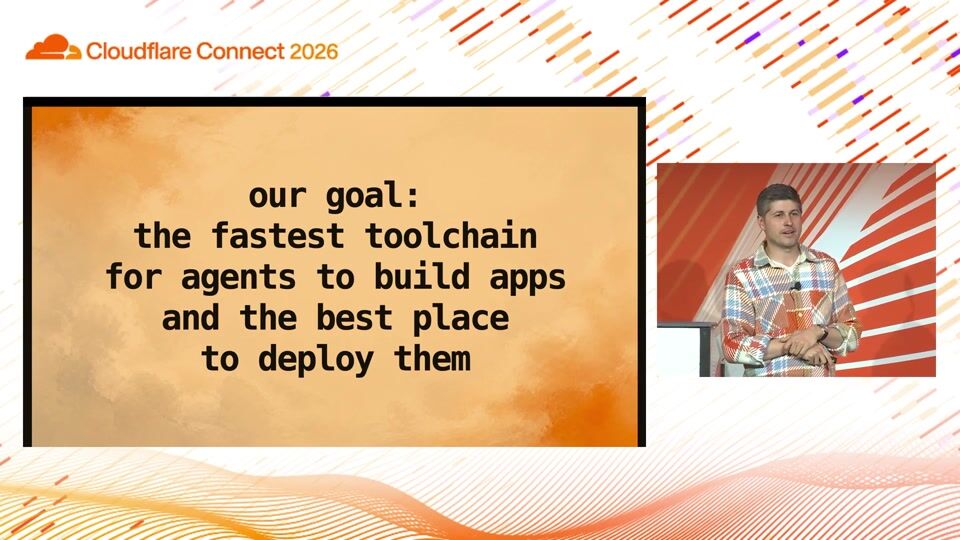
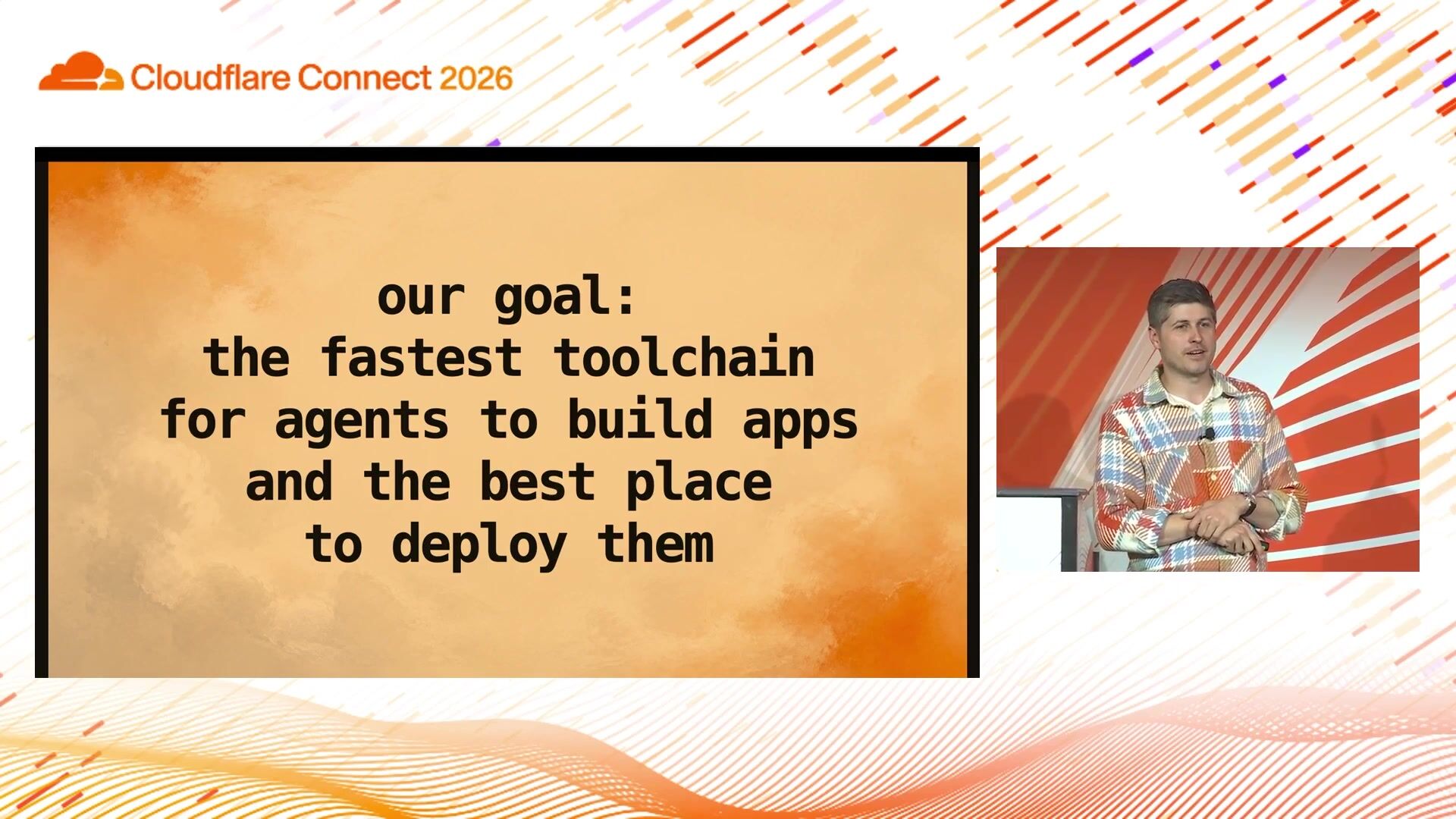
7:01really like our goal for my team specifically i'm not going to speak for everybody but our goal for my team is to build the fastest tool chain for agents and to be the place that you can deploy them right that is it at the end of the day i want to take every single piece of the stack and make it incredibly easy for agents to use and i want to bring that agentic workflow like loop down to the minimum amount of time possible because if we're going to scale this thing up if we're going to be running thousands of agents all working together like that's what's going to happen you i wish i could share more we have so much cool stuff in the pipeline i mean i think if you look at that existing tooling which is already the fastest stuff you can get out there for sort of like you know bundling front-end applications i bet we're going to deliver about another order of magnitude speed improvements over all of those tools over the next six months um so a bunch of cool stuff in the pipeline and and we're we're taking my own advice we're slot forking ourselves right we're not going to wait for somebody else to do it we're looking at our tools and like how saying how do we rewrite this from scratch to be an order of magnitude better um so anyways uh talk a little about the other side of this so i just talked about a bunch of local tools that only really gets you so far what about production um so production we have a bunch of cool stuff workers observability has been around for a while workers observability is uh like just all the bread and butter traces logs errors everything you would want you can hook up your mcp to it and so you can just say like go look at my logs fix bugs for me we even have like an automated thing that just came out I think last week that we'll do that for you um we're trying to make this as easy as possible we also have a very cool new thing that I think is pretty unique at the moment
8:33where we can generate production flame graphs from your workers um I think this is a thing that when you own the whole tool chain and you have like that level of control we can actually get you production frame graphs whereas like any other thing you know you dockerize something you have to go set that all up yourself and figure out how to wire it all together and we just have that it's the platform right this is one of my favorite new features that we've shipped in the last couple months uh other things we have feature flags we have a feature flagging service it's called flagship you should go use it um flagship is definitely one of those it's in open beta right now if you have feedback i'd love to hear it i think flag feature flags are criminally underused in the industry right deploying to production should be a no -op and then turning on the feature flag should be how you actually activate code right everybody always was worried about like oh how are we gonna like do our merge trains to get all the code in like no no no right feature flags are actually how you exercise the feature and the way you actually get the code out there is by turning on a feature flag um if you ever like there's a little bit of secret sauce here but if you look at any other like very very large enterprise company almost all of them have massively complicated feature flag systems because it is actually the only way to do this kind of stuff at scale so use more feature flags you should base but to be deployed to code to production on every commit and it's just not turned on yet behind a feature flag.
9:55We have gradual rollouts, which is a similar kind of thing, which allows you to like roll out a different version of a worker. It's not really integrated with feature flags yet, but I wanna do that, it's on the roadmap. I'll give you a specific example of how we've done this ourselves. So one of my teams is the artifacts team. So it's Git hosting on Cloudflare. And with Git hosting, we originally implemented this in Zig. So the backend was all in Zig. Check out what we're doing on time. So Zig, we rewrote it in JavaScript. It ended up being faster and lower memory and just generally all around better. And this is one of those things where we, again, we kind of like slot forked ourselves, right? We just said, well, what if we did redid this from scratch rather than trying to like, you know, calcify over the thing that we built that we know had some problems, right? We had some problems with Zig. And we were able to do this very heavily with feature flags.
10:40So we have feature flags allow you to target a single repo, a single customer or a percentage. traffic or percentage traffic of a customer all kinds of things and we could just turn those knobs on and off and basically narrow down exactly what works exactly doesn't work and then have agents go fix the bugs so that's kind of one of our own internal success stories about using feature flags very heavily uh the last chunk of this sort of lightning talk is about things we haven't built yet um so these are things that either we don't have as a service yet or you would have to build yourselves or don't really exist in the industry um Record and replay. I think this is a thing that we're going to see, like, a ton of new startups playing with this kind of thing, where you can actually, like, record entire interactions. There's been stuff out this before, but it's usually very expensive and, like, kind of hard to integrate, and I think we're going to just see this built into platforms, right?
11:30Record and replay your traffic. Don't wonder, does this actually work in production? You can just take a chunk of production traffic and replay it locally. Modeling with TLA+. If you want to. Do people know what TLA Plus is? Maybe a little bit. Does anybody understand TLA Plus? I say no. Put your hand down. No, seriously, like TLA Plus is really cool. It's basically a way to model distributed systems. It's written by Leslie Lamport, who works at Microsoft. When I was at Microsoft, I got to do some TLA Plus. It's pretty fun. It's an incredibly complicated thing. I do not claim to understand TLA Plus. However, agents seem to understand it pretty well. So if you have a complex... distributed system, and you're trying to figure out, like, how do I rewrite this in a different language, you can actually model it with TLA+, verify the behavior of the existing system, and then use that model in order to, like, verify the new system as well.
12:18And then another thing I'm pretty excited about is proofs with Lean. So Lean is a new language in a similar space that any of following any of the math drama around what's going on with OpenAI, a bunch of their proofs are in Lean. So Lean is, like, a proof-based language. I won't claim to understand that either, but I'm pretty excited. about a world where like some of these, I'll say modeling and proof-based languages gives us like new tools to actually figure out how to rebuild systems very cheaply. So that's kind of it. My talk here was about, you know, Slock Fork with confidence. I'm trying to like give you some tools, figure out how you can do that. There's one more thing. So when I was on the way out here, I tweeted about this talk and everybody had been asking me in person if I was going to like.
13:06slot fork something live on stage because i am like the slot fork guy so i didn't want to disappoint um i got a bunch of good suggestions boris boris who's in the front row um suggested slot forking cloudflare and i was like yeah and i was like but wait what if um so if you don't know cloudflare has a lot of services you know our probably biggest broadest easiest service is cloudflare dns and then cloudflare as a reverse proxy as an X layer and then Cloudflare as actual host where you run something on workers, right? And an upcoming feature of workers that I'm leaking right now is that we are going to have TCP and UDP ingress for workers, right, instead of just HTTP. And so we have this working and you can actually play with it in WorkerD locally now.
13:52And, well, DNS is a TCP UDP protocol. So what if you just made a DNS server on Cloudflare workers? Because for some reason you don't want to use 1. one dot one or whatever so you can do this today i slot forked this on the on the plane flight out um it's it's using a tunnel because it has to run locally so right now uh there's a couple things missing production so this is actually running on my mac mini at home so like please like don't hack me or something i don't know like we'll see i'll i'll call my wife and never unplug the mac mini in like an hour um but this is an actual uh actual dns server running on cloudflare workers it works you can like go hit it dig and there's a website and i don't know it's all vibe coded anyways but it it actually really works that's it that's the end of the talk uh keep calm slot fork on
Evan You
Cloudflare
Tanner Linsley
TanStack
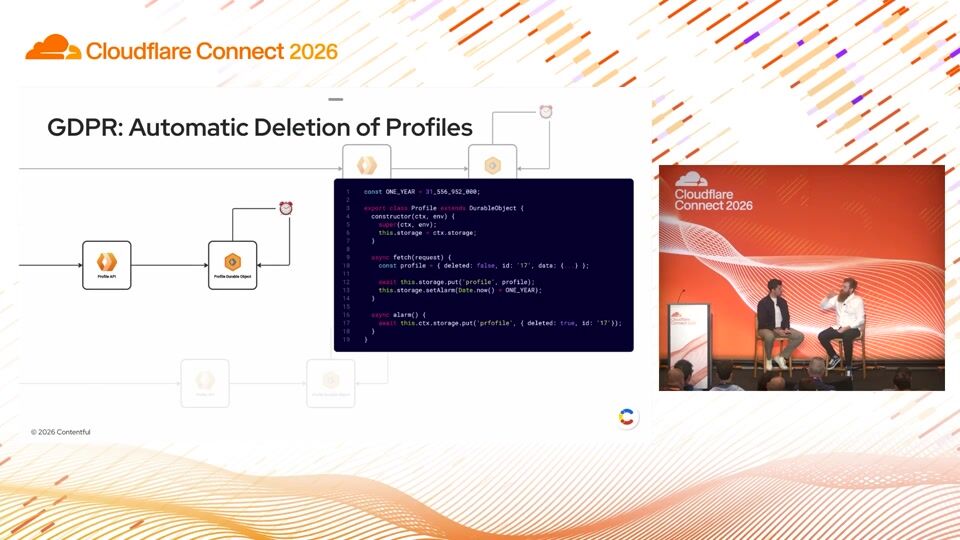
Alexander Braunreuther, Mark Dembo
Contentful · Cloudflare
Be the first to know when registration opens and the agenda goes live.
---
title: "Rebuilding legacy software for the AI era"
url: "https://www.cloudflare.com/connect/2026/session/rebuilding-legacy-software-for-the-ai-era"
year: 2026
---

# Rebuilding legacy software for the AI era

[Watch session](https://www.cloudflare.com/connect/2026/session/rebuilding-legacy-software-for-the-ai-era)

## Session details

- **Track:** Web Performance & Frameworks
- **Topics:** AI transformation, App modernization, QA & software testing
- **Solution areas:** Developer Platform

## About this session

AI has already changed how individual developers write software. The bigger question is what it changes at the level of systems, teams, and strategy. This session is for developers and engineering leaders responsible for mature software. Using vinext, a cleanroom reimplementation of Next.js built in months, we explore how AI makes previously impractical rewrites possible, why test suites and conformance become strategic assets, and how teams can move quickly without losing control. Leave with a framework for finding the right opportunities and deciding when to maintain, modernize, or replace the software they depend on.

## Speakers

- [Steve Faulkner](https://www.cloudflare.com/connect/speakers/2496967) — Director, Workers & Agents, Cloudflare

## Transcript

[0:03] My name is Steve Faulkner, Senior Director of Engineering here at Cloudflare. I'm at SouthpoolSteve on Twitter. And full disclosure, I did not write the title of this talk. An agent did. So about two months ago, they were like, Steve, what are you going to talk about at Connect? And I was like, dear agent, please write talk title for me and send to marketing team. And so this is what came out. So everybody buckle up, because this is actually the title of this talk. keep calm and slap fork on so as I said before I'm Steve Faulkner I'm a manager I manage like 120 people so I'm responsible for like workers and a bunch of our framework integration our CLI tools a bunch of our open source tooling don't really write code day-to-day these much that much anymore does everybody know what vNext is kind of maybe just like raise their hands do people know what this is okay not as many as I thought all right we'll give a little history right so X is this thing that I made last February and it started with a really simple question.

[1:00] So what if we rebuilt Next.js on Vite? If you don't know what Next.js is, it's pretty much the most popular front-end React framework. Apologies to the Tanstack people. Vite itself is the bundling tool that is used by most of the frameworks, but not Next.js notably. And so this is February of earlier this year, Opus 4.5 had just landed and I was like, what can AI do, right? this was less about actually this problem and more like how far can I push AI and fast forward about a week and we had launched it right so within one week we rebuilt the Next .js framework on top of Vite made a big splash on the internet a lot of people were very excited a lot of people were very mad and it coined this term that was not invented by me but I have since embraced called slot fork all right so people called it a slot fork of Next .js which is that took something that already existed I didn't actually fork Next.js, I re-implemented entirely, right?

[1:55] Next.js has a great test suite, it was very easy to re-implement with agents and only took, like I said, really was working in a couple of days and took a week to sort of polish it off. So this talk is about slot forks and sort of, you know, where things are going now. So this is back in February, this term is coined in February. Since then, what has happened? Well, everything is getting slot forks, TypeScript slot forks. This is actually TSRS, which was made by somebody else, but we just took ownership of. We got kind of donated to Cloudflare. There's a blog post about it today, if you haven't seen it. So Typeflix script got slot forked. React got slot forked. There's a slot fork by the Tansac guys called Redact. Veet itself got slot forked. Lovable, if you've seen them present here, they slot forked Veet itself into a thing called OJ.

[2:46] Bun slot forked itself. basically said we're going to rewrite our entire thing from zig into rust they did that very notably in july everybody said it was going to be impossible it wouldn't work and here it is working uh versell themselves who kind of you know coined slot fork they've slot forked bash uh people have slot forked uh postgres into rust pretty much every game on the planet got slot forked in the last like two weeks if you've been looking on twitter you want you want to play any game on any system now right you want to play like gamecube on your xbox you can probably do it right it's pretty wild so the whole world is basically nothing but slot forks now oh we did another slot fork don't show this to the cleft people but we basically slot fork jev into cleft which is like a new model by cloudflare uh i i kept coming up with examples the more i looked neon slot folk their own dashboard uh so people sought for gmail to work on cloudflare and that was pretty cool everything is a slot fork now and so um I feel sort of like morally responsible that I have, you know, create, I have this small thing I wanted to do and it sort of feels like it's spiraled out of control and I'm like dealing with the tension of like what happens now with this slot fork thing that I have like put out into the world and everybody I know has the same question which is when is Christopher Nolan going to make a movie about this, right?

[4:06] You know, morally torn characters trying to figure out what's going to happen. next who's gonna play me is it matt damon is it robert pattinson i promise i answer that that's the end of that joke um but it really is like i'm trying to figure out like i wanted to come into this and give people some kind of hope that like this is what's happening but here's what you can do about it right like here's what's actually going to happen so steve's first law of software engineering um nobody's said i can do that yet but here we go uh everything that can be slot forked will be slot for i think this is just true right i think like any piece of software that has an surface area is going to get rewritten or changed or re -implemented in something else if your customer doesn't like it they're going to do it if your internal people don't like it they're going to do it um if it's open source that it makes it a little bit easier but even look at all the decompiling happen right now photoshop got flopped work last week right like this is just what's going to happen to all software so what do we do i'm here to tell you that you basically just have to embrace it right like this is the world we're in now and so what are you about it we have to actually like embrace this world so i'm kind of giving you some like tools that i think will help solve this and i also regret to inform you this a lot of these problems are old problems like how do we build software that isn't sloppy is not a new problem we've been contending with this for like 20 years so the rest of this talk is going to be a little bit like eat your vegetables right like if you're coming here for like some grand like secret sauce about how to deal with slot fork software right that's not really it like we already have the tools write tests right

[5:36] like this is one of those things and the cool part is ai can help you with all this stuff right um tests have always been how we like build software that we have confidence in and can ship production to production um and ai can help you write more tests right if you're not already using ai to just add more tests to the observable surface area of your application or every product you should be doing that um by the way this starts in sort of the easy mode all the way into the hard mode um so i have to plug all of our stuff um if you want to write tests and like, I've never in a test before, check out vTest, because vTest is the thing that we now maintain that basically is a great testing framework. Type checking, I talked about TypeScript RS, so you can definitely check this out. We're good friends with the TypeScript team, and so this is, we're trying to do a very faithful reproduction of TypeScript in Rust, but basically do something that's faster and also serves other use cases like works in WASM, things like that.

[6:28] Oxlint, which we already have, is trying to be the best formatter, or sorry, best lyncher that you Aux Format, trying to be the best, fastest formatter can be. And if you want all of this packaged up into one thing, you can use Vite, which is the bundler that we now maintain as part of the Cloudflare team, and all this packaged up into a tool called Vite+. So if you're looking for, like, you walk out of this talk and you're like, how should I do this stuff to what Steve was talking about? Point your agent and say, set up Vite+, for my applications, and you will get all the best, latest, greatest tooling so that you will have good agentic development experiences.

[7:01] really like our goal for my team specifically i'm not going to speak for everybody but our goal for my team is to build the fastest tool chain for agents and to be the place that you can deploy them right that is it at the end of the day i want to take every single piece of the stack and make it incredibly easy for agents to use and i want to bring that agentic workflow like loop down to the minimum amount of time possible because if we're going to scale this thing up if we're going to be running thousands of agents all working together like that's what's going to happen you i wish i could share more we have so much cool stuff in the pipeline i mean i think if you look at that existing tooling which is already the fastest stuff you can get out there for sort of like you know bundling front-end applications i bet we're going to deliver about another order of magnitude speed improvements over all of those tools over the next six months um so a bunch of cool stuff in the pipeline and and we're we're taking my own advice we're slot forking ourselves right we're not going to wait for somebody else to do it we're looking at our tools and like how saying how do we rewrite this from scratch to be an order of magnitude better um so anyways uh talk a little about the other side of this so i just talked about a bunch of local tools that only really gets you so far what about production um so production we have a bunch of cool stuff workers observability has been around for a while workers observability is uh like just all the bread and butter traces logs errors everything you would want you can hook up your mcp to it and so you can just say like go look at my logs fix bugs for me we even have like an automated thing that just came out I think last week that we'll do that for you um we're trying to make this as easy as possible we also have a very cool new thing that I think is pretty unique at the moment

[8:33] where we can generate production flame graphs from your workers um I think this is a thing that when you own the whole tool chain and you have like that level of control we can actually get you production frame graphs whereas like any other thing you know you dockerize something you have to go set that all up yourself and figure out how to wire it all together and we just have that it's the platform right this is one of my favorite new features that we've shipped in the last couple months uh other things we have feature flags we have a feature flagging service it's called flagship you should go use it um flagship is definitely one of those it's in open beta right now if you have feedback i'd love to hear it i think flag feature flags are criminally underused in the industry right deploying to production should be a no -op and then turning on the feature flag should be how you actually activate code right everybody always was worried about like oh how are we gonna like do our merge trains to get all the code in like no no no right feature flags are actually how you exercise the feature and the way you actually get the code out there is by turning on a feature flag um if you ever like there's a little bit of secret sauce here but if you look at any other like very very large enterprise company almost all of them have massively complicated feature flag systems because it is actually the only way to do this kind of stuff at scale so use more feature flags you should base but to be deployed to code to production on every commit and it's just not turned on yet behind a feature flag.

[9:55] We have gradual rollouts, which is a similar kind of thing, which allows you to like roll out a different version of a worker. It's not really integrated with feature flags yet, but I wanna do that, it's on the roadmap. I'll give you a specific example of how we've done this ourselves. So one of my teams is the artifacts team. So it's Git hosting on Cloudflare. And with Git hosting, we originally implemented this in Zig. So the backend was all in Zig. Check out what we're doing on time. So Zig, we rewrote it in JavaScript. It ended up being faster and lower memory and just generally all around better. And this is one of those things where we, again, we kind of like slot forked ourselves, right? We just said, well, what if we did redid this from scratch rather than trying to like, you know, calcify over the thing that we built that we know had some problems, right? We had some problems with Zig. And we were able to do this very heavily with feature flags.

[10:40] So we have feature flags allow you to target a single repo, a single customer or a percentage. traffic or percentage traffic of a customer all kinds of things and we could just turn those knobs on and off and basically narrow down exactly what works exactly doesn't work and then have agents go fix the bugs so that's kind of one of our own internal success stories about using feature flags very heavily uh the last chunk of this sort of lightning talk is about things we haven't built yet um so these are things that either we don't have as a service yet or you would have to build yourselves or don't really exist in the industry um Record and replay. I think this is a thing that we're going to see, like, a ton of new startups playing with this kind of thing, where you can actually, like, record entire interactions. There's been stuff out this before, but it's usually very expensive and, like, kind of hard to integrate, and I think we're going to just see this built into platforms, right?

[11:30] Record and replay your traffic. Don't wonder, does this actually work in production? You can just take a chunk of production traffic and replay it locally. Modeling with TLA+. If you want to. Do people know what TLA Plus is? Maybe a little bit. Does anybody understand TLA Plus? I say no. Put your hand down. No, seriously, like TLA Plus is really cool. It's basically a way to model distributed systems. It's written by Leslie Lamport, who works at Microsoft. When I was at Microsoft, I got to do some TLA Plus. It's pretty fun. It's an incredibly complicated thing. I do not claim to understand TLA Plus. However, agents seem to understand it pretty well. So if you have a complex... distributed system, and you're trying to figure out, like, how do I rewrite this in a different language, you can actually model it with TLA+, verify the behavior of the existing system, and then use that model in order to, like, verify the new system as well.

[12:18] And then another thing I'm pretty excited about is proofs with Lean. So Lean is a new language in a similar space that any of following any of the math drama around what's going on with OpenAI, a bunch of their proofs are in Lean. So Lean is, like, a proof-based language. I won't claim to understand that either, but I'm pretty excited. about a world where like some of these, I'll say modeling and proof-based languages gives us like new tools to actually figure out how to rebuild systems very cheaply. So that's kind of it. My talk here was about, you know, Slock Fork with confidence. I'm trying to like give you some tools, figure out how you can do that. There's one more thing. So when I was on the way out here, I tweeted about this talk and everybody had been asking me in person if I was going to like.

[13:06] slot fork something live on stage because i am like the slot fork guy so i didn't want to disappoint um i got a bunch of good suggestions boris boris who's in the front row um suggested slot forking cloudflare and i was like yeah and i was like but wait what if um so if you don't know cloudflare has a lot of services you know our probably biggest broadest easiest service is cloudflare dns and then cloudflare as a reverse proxy as an X layer and then Cloudflare as actual host where you run something on workers, right? And an upcoming feature of workers that I'm leaking right now is that we are going to have TCP and UDP ingress for workers, right, instead of just HTTP. And so we have this working and you can actually play with it in WorkerD locally now.

[13:52] And, well, DNS is a TCP UDP protocol. So what if you just made a DNS server on Cloudflare workers? Because for some reason you don't want to use 1. one dot one or whatever so you can do this today i slot forked this on the on the plane flight out um it's it's using a tunnel because it has to run locally so right now uh there's a couple things missing production so this is actually running on my mac mini at home so like please like don't hack me or something i don't know like we'll see i'll i'll call my wife and never unplug the mac mini in like an hour um but this is an actual uh actual dns server running on cloudflare workers it works you can like go hit it dig and there's a website and i don't know it's all vibe coded anyways but it it actually really works that's it that's the end of the talk uh keep calm slot fork on

## Related sessions

- [Developer tooling in the agentic era](https://www.cloudflare.com/connect/2026/session/developer-tooling-in-the-agentic-era)
- [TanStack Start, and the rest of the TanStack ecosystem](https://www.cloudflare.com/connect/2026/session/tanstack-start-and-the-rest-of-the-tanstack-ecosystem)
- [100 billion profiles, one early bet on Cloudflare Durable Objects](https://www.cloudflare.com/connect/2026/session/100-billion-profiles-one-early-bet-on-cloudflare-durable-objects)

## More from Connect

- [All sessions](https://www.cloudflare.com/connect/)
- [Get notified for Connect 2027](https://www.cloudflare.com/connect#2027)


